Though it was not a big chart hit, this teen anthem is one of Cheap Trick's best-known songs. The singer thinks of his parents as a bit overprotective and kind of weird, but he gains a new respect for them at the end of the song when he wakes up and they are rolling around on the couch listening to his KISS records. Cheap Trick guitarist-songwriter Rick Nielsen recalls in Rolling Stone's Top 500 songs magazine that when he wrote it, he had to "go back and put myself in the head of a 14-year-old."
This song is featured in a number of films. In Fast Times At Ridgemont High (1983) the ticket hustler Mike Damone sings "Surrender" to help try to persuade a girl to buy tickets to a Cheap Trick concert. Band members Rick Nielsen and Robin Zander appear in the film Daddy Day Care (2003), which also features this song.
This appears on Cheap Trick's live album At Budokan. Robin Zander's speech, which opens the live version is sampled on the Beastie Boy's 1992 single "Jimmy James."
In a Blender magazine interview, Cheap Trick 's drummer Bun E. Carlos recalls, "We had that track back in 1975. We used to rehearse in the basement of Rick [Nielsen]'s dad's music shop on Seventh Avenue in Rockford, Illinois. As soon as I heard it, I thought it was a really interesting lyric."
Rick Nielsen said: "I used to hear my friends saying they thought their parents were strange. The first thing I got was the opening of the chorus: 'Mommy's all right, daddy's all right.' It just rolled off at one sitting. Those opening lines, 'Mother told me, yes, she told me I 'd meet girls like you.' that 's advice to the lovelorn, and obviously inspired by the old Shirelles hit 'Mama said that there'd be days like this.' It 's a good way to start a song, if you can make it go with a chord progression."
This song contains one of the more famous key changes in rock. According to Rick Nielsen, the song begins in B flat, goes to B for two verses, then changes key to C around 2:15 as Robin Zander sings, "Whatever happened to all this season's losers of the year...Unblocked Superfighters"
The live version of this song from the Budokan concert was used on the Detroit Rock City soundtrack. The movie was about some kids going to a KISS concert.
The lyrics about the mother being in the WAC's is a reference to the Women's Army Corps, which was active during World War II. And if you're wondering why those lyrics, "Now I had heard the WACs recruited old maids for the war," don't make much sense, it's because they weren't written that way. The original lyrics were deemed too racy: "Now I had heard the WACs were either old maids, dykes or whores."
The high-pitched sound in the mix was made using an arpeggiator on the keyboard. When the band recorded their next album, Dream Police, they used a real string section since they had a bigger budget. This is best heard on the title track.
This song was played on episode 19 of season 1 on the TV show Scrubs.
Cheap Trick's version of "In The Street," originally recorded by Big Star, was used as the theme song of That '70s Show. In this version, they incorporate the "We're all alright" chant from "Surrender."
In concert, this is the song where Rick Nielsen would break out his famous 5-necked guitar. Nielsen owns hundreds of guitars, many with outrageous designs built by the Hamer Guitar company.
Tuesday, 25 April 2017

Friday, 10 June 2016
Jessie J Did It Like a Dude and Most Dykes Like It
s debut single “Do It Like a Dude”
dropped November 21st in the UK but word didn’t reach Autostraddle
headquarters ’til today — and just in time, as on January 7th
22-year-old Jessie J was announced as The BBC’s Sound of 2011.
(Previous winners of this music-critic-and-industry-professionals-
selected poll include 50 Cent, Corinne Bailey Rae, Adele and Little
Boots.) She also snagged the 2011 Critics Choice BRIT Award.
Jessica Cornish — aka Jessie J —was 11 when she got cast in a West End production of an Andrew Lloyd Webber musical. Yup: the girl had serious pipes from the get-go. Cornish kept on performing through adolescence and attended performing arts schools. She then went on to pen songs for artists including Justin Timberlake, Chris Brown, Alicia Keys and Christina Aguilera. In fact, she’s the lady responsible for Miley Cyrus’s hypnotically obnoxious hit, “Party in the USA.” Jessie has been writing and performing songs on her own YouTube channel for a while now, but 2011 will bring the release of her first album, “Who You Are.”
Why should you care? Because you’re gonna have some strong feelings about “Do It Like a Dude.” Is “Do it Like a Dude” a gutsy genderfucking first single, or, as some have argued, just our latest serving of homoeroticized fetishized pop?
I’ll tell ya one place where this single is gonna be ON BLAST — Dinah Shore Weekend and every lesbian club night for the rest of the year. Have you ever been in a lesbian club when “I Kissed a Girl” comes on? If you have, the thumping clangy sexy beats of “Like a Dude” will come as a welcome respite.
See, when “I Kissed a Girl” comes on, suddenly those eight words — I KISSED A GIRL AND I LIKED IT — are airlifted from context (Katy Perry kisses girls to attract the male gaze, the chorus is boyfriend-pandering, Perry is misappropriating bisexuality by reselling it as a party trick) and exhumed exuberantly by a sweaty crowd of lesbians. It’d seem that despite the myriad ways we’ve been wronged by Katy Perry, those eight words speak to a queer experience few other pop songs do and therefore it’s become the default lesbian club jam.
Conversely, “Do It Like a Dude” is, on the surface, an anthem of independence — the only reaction Jessie J expects from your wannabe-boyfriend is his acknowledgment that lesbian sex doesn’t need him. But does singing that she can do “it” “like a dude” just play into the idea that a thing must be “male” to be valid? No, I don’t think so. See, Jessie uses “dude” as a term independent of its ascribed meaning. She’s going all Butler on us by employing “dude” as an adjective encompassing “male” traits like strength/power/aggression rather than using it as another word for “man.” In this context she frees the term from its traditional application as a noun.
Compare “Do it Like a Dude” to Ciara’s “Like a Boy”: “Like a Boy” is a kickass song, and the video’s got cute gender-bending costumes — but it’s still about men. Ciara defers to the man she loves, asking him, “what if i had a thing on the side, made you cry/ would the rules change up or would they still apply/ if I played you like a toy? / Sometimes I wish I could act a boy.”

Although “Do it Like a Dude” employs some of masculinity’s most misogynistic tropes, it also celebrates masculine women and uses these women to fuck with the highly gendered and outrageously potent “pimp” music-video image — which is pretty awesome.
My first reaction to this video was YES THIS YES THIS LIKE IT YES THIS!

There’s something unnervingly appealing/addictive/empowering about the video. Jessie J is like some psychotic quarter-alien quarter-Megan-Fox quarter-rhinestone lipcowboy quarter-geometric pop music avatar advertising American Apparel leotards and/or strap-ons while singing.

Jessie repeats “do it like a dude” in a jarringingly auto-tuned voice (unnecessary really as THE GIRL CAN SING- Justin Timberake calls her “the best singer in the world right now“), gesturing terrifically towards her genitals with upturned palms or hurling her crotch forward into the air while cocking her knees outward like a flailing puppet. Her exaggerated psycho-eyes and jerky head movements assault the camera with “fuck you i’m fucking your face with my fucking song” energy reminiscent of Missy Elliot’s “The Rain [Supa Dupa Fly].”
The center of Jessie J’s physical power is, indeed, as her lyrics proclaim, squarely crotch-centric:

More importantly, however, are the background dancers (according to a reader tip — one of the dancers is Jessie J’s girlfriend or ex-girlfriend):
 These dirt-stained studs and butches posture with ecstatic, biting
aggression, thrusting their limbs forward or out to flex their size and
ability to intimidate. The scene drips with dirt, sex and unapologetic
masculinity. When Jessie J strolls through the hellish underground
lesbian club, she confidently eyes the women with a Shane-esque
gaze. There’s nothing uncertain or playful about the dyke sex here.
It’s alternatively Fight Club and Dance Club, No Boys Allowed.
These dirt-stained studs and butches posture with ecstatic, biting
aggression, thrusting their limbs forward or out to flex their size and
ability to intimidate. The scene drips with dirt, sex and unapologetic
masculinity. When Jessie J strolls through the hellish underground
lesbian club, she confidently eyes the women with a Shane-esque
gaze. There’s nothing uncertain or playful about the dyke sex here.
It’s alternatively Fight Club and Dance Club, No Boys Allowed.
Which isn’t to say some elements of this video aren’t problematic. I mean, why do we have all these hot dykes of color dancing in wifebeaters but the only women who kiss in the video are these two, dropped in mid-frame like out of someone else’s music video?

I think Jessie J pulls it off.

But let’s get to the real reason you’re reading this: is Jessie J gay?
Because to me, the queer sensibility of this video and the joke she’s making feels uniquely authentic. It “pings,” so to speak, and the dancers ping like how Heather Cassils pings in Lady Gaga’s “Telephone.”
So we’re going to tentatively go with “yes.” From lesbian site The Most Cake:
Does it matter? Is it fair to speculate? I endeavour to suggest that YES, it does matter. Music isn’t like acting. Music is generally accepted as autobiographical to a certain extent — Katy Perry could play a lesbian in a movie, but we don’t want to see her singing about kissing girls on an album. Raise your glass to us or shut up.
It matters because as a community we’re pretty fucking sick of seeing our sexuality appropriated by straight people to meet their own (financial) ends and this song tastes different when viewed as one more straight girl’s tacky re-appropriation.
But if she’s gay, then we can forgive her overblown machismo lyrics and trust the familiar underlying message: it’s just like our own jokey reactions to men claiming lesbians can’t REALLY have sex.
But maybe “Do It Like a Dude” won’t even be Jessie J’s most dyke-friendly single. Who You Are, a relatively generic devotional to self-expression and self-love which starts out acoustic and breaks into a Beautiful-esque pop ballad, offers a less potentially problematic message that’ll ring true for queers all over. It’s obviously about compromising your true (GAY!) identity to please others:
Jessica Cornish — aka Jessie J —was 11 when she got cast in a West End production of an Andrew Lloyd Webber musical. Yup: the girl had serious pipes from the get-go. Cornish kept on performing through adolescence and attended performing arts schools. She then went on to pen songs for artists including Justin Timberlake, Chris Brown, Alicia Keys and Christina Aguilera. In fact, she’s the lady responsible for Miley Cyrus’s hypnotically obnoxious hit, “Party in the USA.” Jessie has been writing and performing songs on her own YouTube channel for a while now, but 2011 will bring the release of her first album, “Who You Are.”
Why should you care? Because you’re gonna have some strong feelings about “Do It Like a Dude.” Is “Do it Like a Dude” a gutsy genderfucking first single, or, as some have argued, just our latest serving of homoeroticized fetishized pop?
I’ll tell ya one place where this single is gonna be ON BLAST — Dinah Shore Weekend and every lesbian club night for the rest of the year. Have you ever been in a lesbian club when “I Kissed a Girl” comes on? If you have, the thumping clangy sexy beats of “Like a Dude” will come as a welcome respite.
See, when “I Kissed a Girl” comes on, suddenly those eight words — I KISSED A GIRL AND I LIKED IT — are airlifted from context (Katy Perry kisses girls to attract the male gaze, the chorus is boyfriend-pandering, Perry is misappropriating bisexuality by reselling it as a party trick) and exhumed exuberantly by a sweaty crowd of lesbians. It’d seem that despite the myriad ways we’ve been wronged by Katy Perry, those eight words speak to a queer experience few other pop songs do and therefore it’s become the default lesbian club jam.
Conversely, “Do It Like a Dude” is, on the surface, an anthem of independence — the only reaction Jessie J expects from your wannabe-boyfriend is his acknowledgment that lesbian sex doesn’t need him. But does singing that she can do “it” “like a dude” just play into the idea that a thing must be “male” to be valid? No, I don’t think so. See, Jessie uses “dude” as a term independent of its ascribed meaning. She’s going all Butler on us by employing “dude” as an adjective encompassing “male” traits like strength/power/aggression rather than using it as another word for “man.” In this context she frees the term from its traditional application as a noun.
Compare “Do it Like a Dude” to Ciara’s “Like a Boy”: “Like a Boy” is a kickass song, and the video’s got cute gender-bending costumes — but it’s still about men. Ciara defers to the man she loves, asking him, “what if i had a thing on the side, made you cry/ would the rules change up or would they still apply/ if I played you like a toy? / Sometimes I wish I could act a boy.”
Although “Do it Like a Dude” employs some of masculinity’s most misogynistic tropes, it also celebrates masculine women and uses these women to fuck with the highly gendered and outrageously potent “pimp” music-video image — which is pretty awesome.
My first reaction to this video was YES THIS YES THIS LIKE IT YES THIS!
There’s something unnervingly appealing/addictive/empowering about the video. Jessie J is like some psychotic quarter-alien quarter-Megan-Fox quarter-rhinestone lipcowboy quarter-geometric pop music avatar advertising American Apparel leotards and/or strap-ons while singing.
Jessie repeats “do it like a dude” in a jarringingly auto-tuned voice (unnecessary really as THE GIRL CAN SING- Justin Timberake calls her “the best singer in the world right now“), gesturing terrifically towards her genitals with upturned palms or hurling her crotch forward into the air while cocking her knees outward like a flailing puppet. Her exaggerated psycho-eyes and jerky head movements assault the camera with “fuck you i’m fucking your face with my fucking song” energy reminiscent of Missy Elliot’s “The Rain [Supa Dupa Fly].”
The center of Jessie J’s physical power is, indeed, as her lyrics proclaim, squarely crotch-centric:
More importantly, however, are the background dancers (according to a reader tip — one of the dancers is Jessie J’s girlfriend or ex-girlfriend):
Which isn’t to say some elements of this video aren’t problematic. I mean, why do we have all these hot dykes of color dancing in wifebeaters but the only women who kiss in the video are these two, dropped in mid-frame like out of someone else’s music video?
And what about the lyrics?
Boom Boom, pull me a beer
No pretty drinks, I’m a guy out here
Rollin’ rollin’ rollin’ rollin’ money like a pimp
My B I T C H’s on my d*ck like this
Boys, come say what you wanna
Boys, you need to lick my dollar
Boys, gettin’ hot under the collar
Is she “reclaiming” the language of “bitches,” “pimps,” and “on my
dick,” or does the manufactured packaged oversexed pop-shiny veneer of
her presentation derail any potential progressiveness? If it’s
inherently degrading to use that language at all, then what language
should she use? Could a pop song handle a message more nuanced than “do
it like a dude”? Is it even possible to be progressive AND dancey these
days? Even Lady Gaga’s best songs are composed of tawdry one-liners like
“I wanna take a ride on your disco stick.” Ke$ha’s “We R Who We R”
rides #3 on the Billboard chart with“We’re dancing like we’re
dumb-dum-duh-duh-duh dumb / Our bodies going numb-num-nuh-nuh-nuh numb
/ We’ll be forever young-yun-y-y-y young / You know we’re superstars
/ We R who we R.”No pretty drinks, I’m a guy out here
Rollin’ rollin’ rollin’ rollin’ money like a pimp
My B I T C H’s on my d*ck like this
Boys, come say what you wanna
Boys, you need to lick my dollar
Boys, gettin’ hot under the collar
I think Jessie J pulls it off.
But let’s get to the real reason you’re reading this: is Jessie J gay?
Because to me, the queer sensibility of this video and the joke she’s making feels uniquely authentic. It “pings,” so to speak, and the dancers ping like how Heather Cassils pings in Lady Gaga’s “Telephone.”
So we’re going to tentatively go with “yes.” From lesbian site The Most Cake:
… yes – you guessed correctly. Jessie
J is one of us; a big lezzie lesbo. Well, officials have not broached
the subject yet but that promo, those haircuts, and the fact that her
girlfriend is in the video (#musicinsiderconfirmed) all point to one big
dykadelic conclusion.
A recent Contact Music article, as quoted on ONTD, refers to Jessie as an “openly-gay 22 year old,” but that sentence seems to be removed from the original article which it cites:
The fast rising pop singer – who has previously penned hits for Miley Cyrus, Alicia Keyes, and Chris Brown – said she wrote her first release in 15 minutes as a reaction to the songs she kept hearing on the TV at the time.
She said: “At the
time I felt that the chart was very auto-tune heavy. There was a lot of
guys with their trousers down by their knees and their neck chains so
heavy they couldn’t hold their head up.
“And I just went into the studio and they played a beat and I just started singing, ‘Do it like a brother, do it like a dude’.
“And it was a joke, I was laughing. I said ‘let’s write a joke song’. And within 15 minutes it was done.”
Jessie, the openly gay 22 year old, also said she kept Rihanna in mind when she wrote the track, and feels that it has “her swag”.
More importantly, there’s nothing anywhere on the internet that even
addresses Jessie dating ANYONE, man or woman. I’ve been writing about
lesbians/pop culture for a long-ass time and generally that kind of
exclusion almost always indicates homosexuality.Does it matter? Is it fair to speculate? I endeavour to suggest that YES, it does matter. Music isn’t like acting. Music is generally accepted as autobiographical to a certain extent — Katy Perry could play a lesbian in a movie, but we don’t want to see her singing about kissing girls on an album. Raise your glass to us or shut up.
It matters because as a community we’re pretty fucking sick of seeing our sexuality appropriated by straight people to meet their own (financial) ends and this song tastes different when viewed as one more straight girl’s tacky re-appropriation.
But if she’s gay, then we can forgive her overblown machismo lyrics and trust the familiar underlying message: it’s just like our own jokey reactions to men claiming lesbians can’t REALLY have sex.
But maybe “Do It Like a Dude” won’t even be Jessie J’s most dyke-friendly single. Who You Are, a relatively generic devotional to self-expression and self-love which starts out acoustic and breaks into a Beautiful-esque pop ballad, offers a less potentially problematic message that’ll ring true for queers all over. It’s obviously about compromising your true (GAY!) identity to please others:
I stare at my reflection in the mirror…
Why am I doing this to myself?
Losing my mind on a tiny error,
I nearly left the real me on the shelf …
“no,no, no, no…”
Why am I doing this to myself?
Losing my mind on a tiny error,
I nearly left the real me on the shelf …
“no,no, no, no…”
Sometimes it’s hard to follow your heart
Tears don’t mean you’re losing, everybody’s bruising
Just be true to who you are
Tears don’t mean you’re losing, everybody’s bruising
Just be true to who you are
Brushing my hair, do I look perfect?
I forgot what to do to fit the mould
The more I try, the less it’s working
‘cos everything inside me screams: no, no, no, no, no, no, no
That’s the one you can play in the car after coming out to someone
mean who doesn’t understand how awesome it is that you can do it like a
dude.
I forgot what to do to fit the mould
The more I try, the less it’s working
‘cos everything inside me screams: no, no, no, no, no, no, no
Thursday, 31 March 2016
Tori Kelly, Jessie J & More to Perform on ABC's DISNEYLAND 60 2-Hour Special
Singing stars Tori Kelly, Jessie J and
Kelsea Ballerini lend their voices to some of the most popular and
beloved melodies in the Disney songbook when the Disneyland Resort
Diamond Celebration is showcased on THE WONDERFUL WORLD OF DISNEY:
DISNEYLAND 60, with Master of Ceremonies Derek Hough, SUNDAY, FEBRUARY
21 (8:00-10:00 p.m. EST), on the ABC Television Network.
Tori Kelly, 2016 Grammy nominee for Best New Artist, pairs with Kermit the Frog for a beautiful acoustic rendition of "The Rainbow Connection" from "The Muppet Movie." Versatile singing artist and Grammy nominee Jessie J will sing the iconic tune "When You Wish Upon a Star" from the classic Disney movie "Pinnochio." Country's rising female artist Kelsea Ballerini will be showcased singing "Part of Your World" from the Disney hit film "Little Mermaid." Young dance phenomenon Maddie Ziegler, known to millions for her appearances on "Dance Moms," will be featured in Ballerini's musical number, with choreography by Travis Wall.
Kelly, who will launch an extensive North American tour in April in support of her Capitol Records' debut album, "Unbreakable Smile," marks her evolution from Internet sensation to "It girl" - a journey which took years of effort to achieve. The re-release of her album on January 29th includes current single "Hollow" and never-before-heard track "Something Beautiful". Her sweet, soaring voice has garnered her over 120 million views on her Youtube channel.
Jessie J's astounding voice makes her a one-of-a-kind singing superstar. The UK-born singer-songwriter released her "Sweet Talker"album in October 2014 to immediate acclaim, debuting Top 10 on the Billboard 200. It featured the blockbuster single "Bang, Bang," with Jessie J teaming with Ariana Grande and Nicki Minaj.
Ballerini launched to stardom with the release of her number one, gold-certified single debut, "Love Me Like You Mean It," and follow-up top ten single "Dibs" - both from her Black River Entertainment debut album, "The First Time," which landed Top Five on the Billboard Country Albums Chart. Proclaimed by Billboard Magazine as "Country's Next Queen," Ballerini received their "Rising Star" award at the prestigious 2015 Women in Music event.
Ziegler became an internet sensation in part, due to her starring in Sia's hit music video
trilogy. Additionally, she has performed artistic contemporary dance routines on "Jimmy Kimmel Live," "Dancing with the Stars," "Saturday Night Live" and "The Grammys." She is quickly making a name for herself as an aspiring actress with notable credits, including Freeform's "Pretty Little Liars," "Austin & Ally" and the upcoming feature film "The Book of Henry" opposite Naomi Watts. She also recently took home a People's Choice Award.
Kermit the Frog, the world's most famous amphibian, has been entertaining the planet for more than 60 years. A singer, dancer, bestselling author and the star of many hit movies and TV shows, Kermit currently serves as executive producer of "Up Late with Miss Piggy," as seen in the ABC series "The Muppets."
Walt Disney's legacy lives on through the Disneyland Resort, but even he might not have been able to imagine how big his idea would become at Disneyland and at Disney parks that span the globe. He launched an entirely new concept for family entertainment that remains as relevant today as the day it opened, July 17, 1955, for guests of all ages.
The Disneyland Resort will continue its 60th Anniversary Diamond Celebration through Summer 2016, extending the three spectacular after-dark shows created for the special anniversary - the "Paint the Night" parade, the immersive "Disneyland Forever" fireworks show and the all-new "World of Color-Celebrate! The Wonderful World of Walt Disney." The exciting celebration, which also features sparkling décor, themed food and merchandise, will conclude on Labor Day, Monday, September 5, 2016.
"The Wonderful World of Disney: Disneyland 60" is a production of Den of Thieves (MTV Video Music Awards, American Idol, MTV Movie Awards, Critics Choice Movie Awards, the Radio Disney Music Awards). Jesse Ignjatovic and Evan Prager are the executive producers. "The Wonderful World of Disney: Disneyland 60" is broadcast in 720 Progressive (720P), ABC's selected HDTV format, with 5.1 stereo surround sound.
Tori Kelly, 2016 Grammy nominee for Best New Artist, pairs with Kermit the Frog for a beautiful acoustic rendition of "The Rainbow Connection" from "The Muppet Movie." Versatile singing artist and Grammy nominee Jessie J will sing the iconic tune "When You Wish Upon a Star" from the classic Disney movie "Pinnochio." Country's rising female artist Kelsea Ballerini will be showcased singing "Part of Your World" from the Disney hit film "Little Mermaid." Young dance phenomenon Maddie Ziegler, known to millions for her appearances on "Dance Moms," will be featured in Ballerini's musical number, with choreography by Travis Wall.
Kelly, who will launch an extensive North American tour in April in support of her Capitol Records' debut album, "Unbreakable Smile," marks her evolution from Internet sensation to "It girl" - a journey which took years of effort to achieve. The re-release of her album on January 29th includes current single "Hollow" and never-before-heard track "Something Beautiful". Her sweet, soaring voice has garnered her over 120 million views on her Youtube channel.
Jessie J's astounding voice makes her a one-of-a-kind singing superstar. The UK-born singer-songwriter released her "Sweet Talker"album in October 2014 to immediate acclaim, debuting Top 10 on the Billboard 200. It featured the blockbuster single "Bang, Bang," with Jessie J teaming with Ariana Grande and Nicki Minaj.
Ballerini launched to stardom with the release of her number one, gold-certified single debut, "Love Me Like You Mean It," and follow-up top ten single "Dibs" - both from her Black River Entertainment debut album, "The First Time," which landed Top Five on the Billboard Country Albums Chart. Proclaimed by Billboard Magazine as "Country's Next Queen," Ballerini received their "Rising Star" award at the prestigious 2015 Women in Music event.
Ziegler became an internet sensation in part, due to her starring in Sia's hit music video
trilogy. Additionally, she has performed artistic contemporary dance routines on "Jimmy Kimmel Live," "Dancing with the Stars," "Saturday Night Live" and "The Grammys." She is quickly making a name for herself as an aspiring actress with notable credits, including Freeform's "Pretty Little Liars," "Austin & Ally" and the upcoming feature film "The Book of Henry" opposite Naomi Watts. She also recently took home a People's Choice Award.
Kermit the Frog, the world's most famous amphibian, has been entertaining the planet for more than 60 years. A singer, dancer, bestselling author and the star of many hit movies and TV shows, Kermit currently serves as executive producer of "Up Late with Miss Piggy," as seen in the ABC series "The Muppets."
Walt Disney's legacy lives on through the Disneyland Resort, but even he might not have been able to imagine how big his idea would become at Disneyland and at Disney parks that span the globe. He launched an entirely new concept for family entertainment that remains as relevant today as the day it opened, July 17, 1955, for guests of all ages.
The Disneyland Resort will continue its 60th Anniversary Diamond Celebration through Summer 2016, extending the three spectacular after-dark shows created for the special anniversary - the "Paint the Night" parade, the immersive "Disneyland Forever" fireworks show and the all-new "World of Color-Celebrate! The Wonderful World of Walt Disney." The exciting celebration, which also features sparkling décor, themed food and merchandise, will conclude on Labor Day, Monday, September 5, 2016.
"The Wonderful World of Disney: Disneyland 60" is a production of Den of Thieves (MTV Video Music Awards, American Idol, MTV Movie Awards, Critics Choice Movie Awards, the Radio Disney Music Awards). Jesse Ignjatovic and Evan Prager are the executive producers. "The Wonderful World of Disney: Disneyland 60" is broadcast in 720 Progressive (720P), ABC's selected HDTV format, with 5.1 stereo surround sound.
Delta Goodrem v Jessie J: a catfight as contrived as the idea that women can't get along
The ‘feud’ between Delta Goodrem and Jessie J on The Voice is the cliche reality TV was built on. Aren’t we bored of the catfight confection yet?

‘If reports are to be believed, Australian “nice girl” Delta Goodrem is engaged in a a poisonous feud with her fellow Voice judge, British “nice girl” Jessie J.’ Photograph: Getty Images
If reports are to be believed, Australian “nice girl”, singer-superstar Delta Goodrem is engaged in a poisonous feud with her fellow Voice judge, British “nice girl” singer-superstar, Jessie J. “It’s real,” confirmed Channel Nine to the Sydney Morning Herald on Monday, supplying readers with incontrovertible proof of the breakdown of relations: Delta unleashing no less than a “full repertoire of death stares to her fellow judge”. This collection of icicle-eyed hate glaring is viewable in a highlights reel that Nine released to the internet, an act of selfless charity one expects from the commercial television corporation.
Since The Voice began screening scenes of a conflict unparalleled in enmity since the start of the Korean war (peace as yet undeclared, 65 years on), global entertainment media has, of course, been abuzz. Woman’s Day, News.com.au, TVNZ and the Daily Mail have all covered the story of Goodrem’s extraordinary use of the word “shit” to describe how she was feeling after a particularly long day of talent-judging. Yet statements by Goodrem suggest that the “feud” may not be all it seems. With the brazen iconoclasm of a lecturer delivering the introductory lesson to a first-year media studies course, News.com.au quoted the singer as saying, “There can be a lot of illusions with TV editing.”

Nicki Minaj and Mariah Carey bust-up: just what American Idol needed
Read more
This, I think, is where a greater, more shocking entertainment scandal may yet unravel. Goodrem’s admission that reality television employs the techniques of fiction is just the beginning; stand by to learn off-the-cuff comments are prescripted, shots are done in more than one take, make up really does hide everything and that successful, professional women do not inevitably hate one another, no matter how much the conventions of cultural misogyny should like to make it appear so.
The scandal of the Jessie J-Delta Goodrem feud is not, of course, that it’s been so clumsily faked to hype their TV show that not even the protagonists want to admit to it, but that at best it’s ripping off a reality television cliche so tired that it really should be given a Horlicks, a pat and a tuck into bed.
At worst, it’s direct plagiarism of a supposed feud that similarly took place between singers Nicki Minaj and Mariah Carey when they played the original feuding-women-judging-a-talent-show roles on American Idol three years ago. But these two gave their parts some Hollywood oomph, with Minaj both tweeting broadsides at Carey and allowing reports associating her with threats to have Carey shot – yes, shot, with a gun –to disseminate through the media. Amid the higher-stakes environment of the American industrial-entertainment complex, it pays to go large; the Minaj-Carey feud went prime time, big-time, and resulted in a public detente mediated by celebrity interviewer, Barbara Walters.
Goodrem either hasn’t got the interest for this kind of performance, or she’s as bored with the “catfight” confection as the rest of us. The point has been made that the other Voice judges, Ricky Martin and the Madden brothers, have not been recruited into sham skirmishing. Of course they haven’t, they’re men: if male feuding couldn’t be made cool by the Blur-Oasis sniping of the 1990s, it’s certainly not going to get an effective reboot from the Madden brothers.
Do we need Lena Dunham's newsletter when feminism itself has been Dunhamised?
Eleanor Robertson

Read more
So, we are left with The Voice’s girlfight on Nine, reaching for the last stale story idea left in the cupboard to boost ratings – the ancient set-up that “the Chinese character for ‘strife’ is two women living under the same roof”. Quoted by crime novelists like Robert Wilson, dramatised in oft-studied plays like Lorca’s The House of Bernarda Alba, it’s a cultural myth that insists no women anywhere can work or live together. Though disproved by the existence of the modern workplace, sharehousing, lesbian relationships, friendships or, you know, the family, it remains the bedrock not only of Goodrem-J and Carey-Minaj bareknuckling, but any examples of the Real Housewives franchise, any variation on The Hills, the very point of Next Top Model and at its most distilled hysteria within The Bachelor series.
Usually, the fighting is orchestrated around supposed competition for a man’s attention, which neatly flatters the notion of male supremacy as a value worth fighting for. Anyone paying attention may notice that “feuds” overwhelmingly take place between successful and beautiful women, who are rendered petty, ugly and vulgar through the behaviour demanded of public battle, and they leave the arena diminished. Language experts may notice that this supposed Chinese character for “strife” is as made up as any one-dimensional stereotype of women offered by mass media. There’s a rarely-used character for “quarrel” that, containing two women and no roof, really depends on a pre-held misogyny to pretend the experience of two people disagreeing is not universal.
Excised among the public shaming of Goodrem for “salty language” is, of course, the reality that professional women paid to do a job are as likely to get cranky if they’re still on shift at 12:30am as anyone else.
If this were true feuding, Goodrem or J would be off the set without returning and Channel Nine would be briefing the lawyers, not cutting a showreel. Of course, if reality television were anything like reality, there’d be no need to watch television. While The Voice purports and repurposes these ancient gender stereotypes, reality beckons this viewer as far superior entertainment.
‘If reports are to be believed, Australian “nice girl” Delta Goodrem is engaged in a a poisonous feud with her fellow Voice judge, British “nice girl” Jessie J.’ Photograph: Getty Images
If reports are to be believed, Australian “nice girl”, singer-superstar Delta Goodrem is engaged in a poisonous feud with her fellow Voice judge, British “nice girl” singer-superstar, Jessie J. “It’s real,” confirmed Channel Nine to the Sydney Morning Herald on Monday, supplying readers with incontrovertible proof of the breakdown of relations: Delta unleashing no less than a “full repertoire of death stares to her fellow judge”. This collection of icicle-eyed hate glaring is viewable in a highlights reel that Nine released to the internet, an act of selfless charity one expects from the commercial television corporation.
Since The Voice began screening scenes of a conflict unparalleled in enmity since the start of the Korean war (peace as yet undeclared, 65 years on), global entertainment media has, of course, been abuzz. Woman’s Day, News.com.au, TVNZ and the Daily Mail have all covered the story of Goodrem’s extraordinary use of the word “shit” to describe how she was feeling after a particularly long day of talent-judging. Yet statements by Goodrem suggest that the “feud” may not be all it seems. With the brazen iconoclasm of a lecturer delivering the introductory lesson to a first-year media studies course, News.com.au quoted the singer as saying, “There can be a lot of illusions with TV editing.”
Nicki Minaj and Mariah Carey bust-up: just what American Idol needed
Read more
This, I think, is where a greater, more shocking entertainment scandal may yet unravel. Goodrem’s admission that reality television employs the techniques of fiction is just the beginning; stand by to learn off-the-cuff comments are prescripted, shots are done in more than one take, make up really does hide everything and that successful, professional women do not inevitably hate one another, no matter how much the conventions of cultural misogyny should like to make it appear so.
The scandal of the Jessie J-Delta Goodrem feud is not, of course, that it’s been so clumsily faked to hype their TV show that not even the protagonists want to admit to it, but that at best it’s ripping off a reality television cliche so tired that it really should be given a Horlicks, a pat and a tuck into bed.
At worst, it’s direct plagiarism of a supposed feud that similarly took place between singers Nicki Minaj and Mariah Carey when they played the original feuding-women-judging-a-talent-show roles on American Idol three years ago. But these two gave their parts some Hollywood oomph, with Minaj both tweeting broadsides at Carey and allowing reports associating her with threats to have Carey shot – yes, shot, with a gun –to disseminate through the media. Amid the higher-stakes environment of the American industrial-entertainment complex, it pays to go large; the Minaj-Carey feud went prime time, big-time, and resulted in a public detente mediated by celebrity interviewer, Barbara Walters.
Goodrem either hasn’t got the interest for this kind of performance, or she’s as bored with the “catfight” confection as the rest of us. The point has been made that the other Voice judges, Ricky Martin and the Madden brothers, have not been recruited into sham skirmishing. Of course they haven’t, they’re men: if male feuding couldn’t be made cool by the Blur-Oasis sniping of the 1990s, it’s certainly not going to get an effective reboot from the Madden brothers.
Do we need Lena Dunham's newsletter when feminism itself has been Dunhamised?
Eleanor Robertson
Read more
So, we are left with The Voice’s girlfight on Nine, reaching for the last stale story idea left in the cupboard to boost ratings – the ancient set-up that “the Chinese character for ‘strife’ is two women living under the same roof”. Quoted by crime novelists like Robert Wilson, dramatised in oft-studied plays like Lorca’s The House of Bernarda Alba, it’s a cultural myth that insists no women anywhere can work or live together. Though disproved by the existence of the modern workplace, sharehousing, lesbian relationships, friendships or, you know, the family, it remains the bedrock not only of Goodrem-J and Carey-Minaj bareknuckling, but any examples of the Real Housewives franchise, any variation on The Hills, the very point of Next Top Model and at its most distilled hysteria within The Bachelor series.
Usually, the fighting is orchestrated around supposed competition for a man’s attention, which neatly flatters the notion of male supremacy as a value worth fighting for. Anyone paying attention may notice that “feuds” overwhelmingly take place between successful and beautiful women, who are rendered petty, ugly and vulgar through the behaviour demanded of public battle, and they leave the arena diminished. Language experts may notice that this supposed Chinese character for “strife” is as made up as any one-dimensional stereotype of women offered by mass media. There’s a rarely-used character for “quarrel” that, containing two women and no roof, really depends on a pre-held misogyny to pretend the experience of two people disagreeing is not universal.
Excised among the public shaming of Goodrem for “salty language” is, of course, the reality that professional women paid to do a job are as likely to get cranky if they’re still on shift at 12:30am as anyone else.
If this were true feuding, Goodrem or J would be off the set without returning and Channel Nine would be briefing the lawyers, not cutting a showreel. Of course, if reality television were anything like reality, there’d be no need to watch television. While The Voice purports and repurposes these ancient gender stereotypes, reality beckons this viewer as far superior entertainment.
Tuesday, 2 February 2016
Jessie J: 'Should I have lied and said I am bi?'
Price Tag responds to criticism about describing bisexuality as 'a phase' and says she wants 'to find myself a husband'
• Jessie J says her bisexuality was a phase. What a shame – Comment
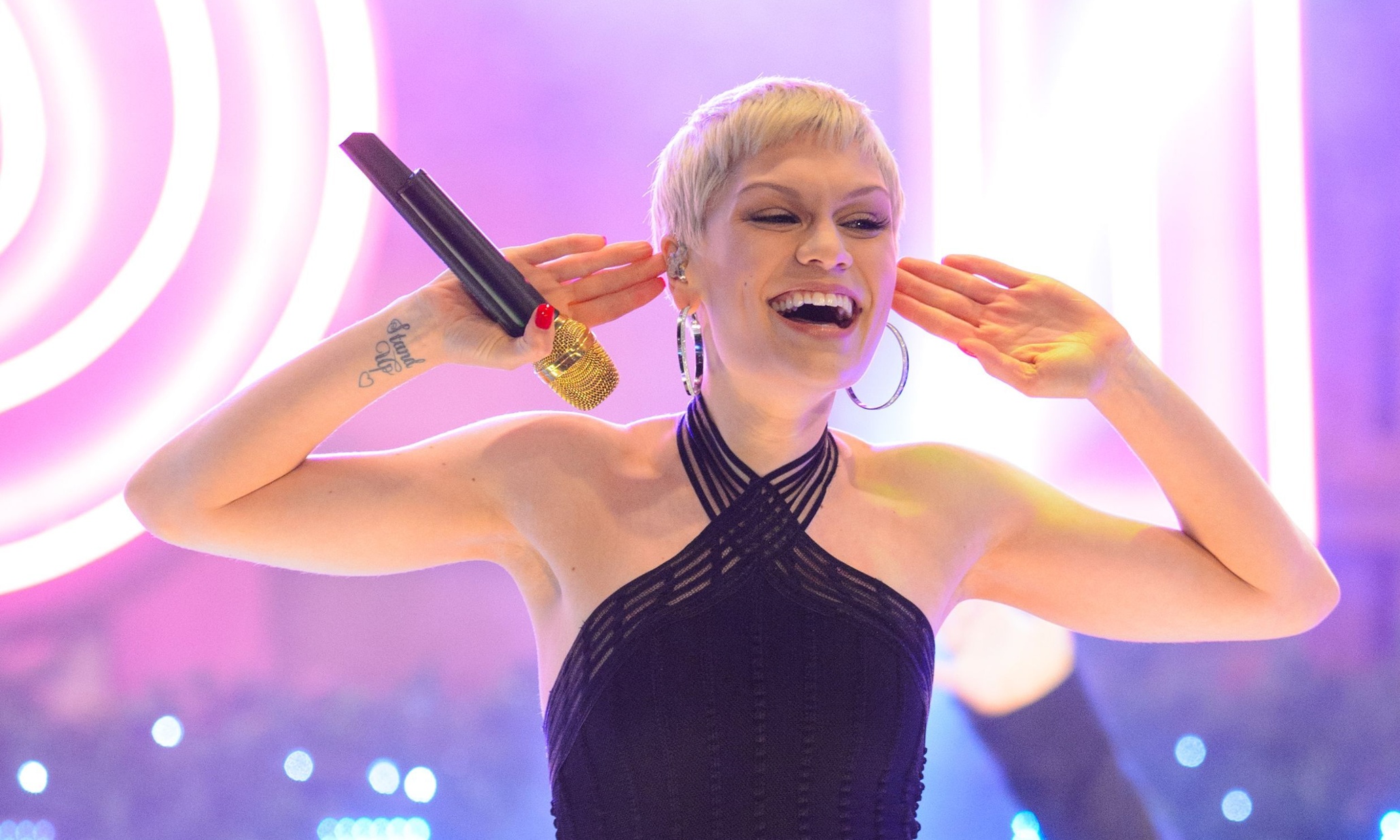
Jessie J has responded to criticism on Tuesday, following comments that her bisexuality "was a phase". "Please tell me what I have done wrong here?" she complained on Twitter. "Should I have lied and said I am bi?"
In an interview in Tuesday's Mirror, Jessie J said she no longer identifies as bisexual. "I want to stop talking about it completely now and find myself a husband."
Several hours later, the Price Tag singer took to Twitter to offer what she described as the "world's longest Tweet": "The hate on my [comments] is uncalled-for and ridiculous!" she began. "Almost five years ago [I said] … 'I have dated girls and boys.' … Which I had! Am I denying that? No! I was young and I experimented!" She went on to Tweet: "[But] at 26 ... I am only singing about loving a man and being brokenhearted by a man. Because I only date men."
According to this post, Jessie J has only ever dated one woman, but she happened to "fall" for that person around the same time she was asked her first-ever question "about relationships". "I was honest and then BAM it took over, the word bisexual before my name on almost every article," the pop star wrote. "Instantly I was boxed."
Two albums later, Jessie J said she was "increasingly frustrated with still feeling like [my sexuality] was defining me as an artist". "I am evolving into the woman I want to be forever, wanting a husband and kids one day and dreaming up my future just like everyone else," she wrote, "[but people] want me to be someone I'm not."
Although she apologised to anyone "who is offended by me calling dating girls a 'phase'," she said that the experience, for her, was just that. "What else do I call it if I no longer have a want for it anymore?"
She said she's still a champion for LGBT rights. "I did and still do stand for love who you love, whichever gender that is," she wrote. "I will continue to stand for it and just not act on it, because I don't want to."
Jessie J is currently finishing work on her third album.
• Jessie J says her bisexuality was a phase. What a shame – Comment
Jessie J: 'I am only singing about loving a man and being broken hearted by a man. Because I only date men.' Photograph: Dominic Lipinski/PA
Jessie J has responded to criticism on Tuesday, following comments that her bisexuality "was a phase". "Please tell me what I have done wrong here?" she complained on Twitter. "Should I have lied and said I am bi?"
In an interview in Tuesday's Mirror, Jessie J said she no longer identifies as bisexual. "I want to stop talking about it completely now and find myself a husband."
Several hours later, the Price Tag singer took to Twitter to offer what she described as the "world's longest Tweet": "The hate on my [comments] is uncalled-for and ridiculous!" she began. "Almost five years ago [I said] … 'I have dated girls and boys.' … Which I had! Am I denying that? No! I was young and I experimented!" She went on to Tweet: "[But] at 26 ... I am only singing about loving a man and being brokenhearted by a man. Because I only date men."
According to this post, Jessie J has only ever dated one woman, but she happened to "fall" for that person around the same time she was asked her first-ever question "about relationships". "I was honest and then BAM it took over, the word bisexual before my name on almost every article," the pop star wrote. "Instantly I was boxed."
Two albums later, Jessie J said she was "increasingly frustrated with still feeling like [my sexuality] was defining me as an artist". "I am evolving into the woman I want to be forever, wanting a husband and kids one day and dreaming up my future just like everyone else," she wrote, "[but people] want me to be someone I'm not."
Although she apologised to anyone "who is offended by me calling dating girls a 'phase'," she said that the experience, for her, was just that. "What else do I call it if I no longer have a want for it anymore?"
She said she's still a champion for LGBT rights. "I did and still do stand for love who you love, whichever gender that is," she wrote. "I will continue to stand for it and just not act on it, because I don't want to."
Jessie J is currently finishing work on her third album.
Jessie J says her bisexuality was a phase. What a shame
Hearts sank when the singer dismissed her brave coming out as something she did when young and naive
'Jessie J’s assertion that she wants to stop talking about it is directed at the media, but the message to young women and men questioning their sexuality is that she’s over it.' Photograph: Anthony Devlin/PA
Pop stars and celebrities can protest against their status as role models as much as they like but it's an unfortunately unavoidable part of being famous. This is why Jessie J stating that her bisexuality was just a phasefeels like such a loss for young gay or questioning people who look up to her.
Ambiguous sexuality has long been a selling point for pop stars, David Bowiebeing the most obvious example. However, Jessie J didn't foster a studied ambiguity about her sexual preferences but instead openly came out as bisexual. I would never deny Jessie J, or anyone else, the right to define themselves, identify with whatever sexuality they want or reject labels altogether. However, since she so publicly and boldly came out as having had relationships with both men and women, it feels all the more disappointing.
To have such a strong, female, bisexual role model speak in a way that clearly distances herself from her bi and gay fans is a big letdown. Jessie J's assertion that she wants to "stop talking about it completely" is directed at a media fond of asking her questions about her sexuality, but however justified her frustration, the message to young women and men questioning their sexuality is that she's over it, she doesn't want it to be a part of her life anymore, it's something that she wants to move away from.
Many people couldn't understand why lesbians were so excited about Ellen Page coming out. "How is this news?" was a fairly common observation. It was news because the lack of female, gay role models for young women is astonishing. I get excited when I see a high-profile gay woman because I see myself in her; being successful, being accepted. Jessie J has described her relationships with women as a phase.
It's an unhelpful term as this is an idea that gay people find themselves constantly battling against. Jessie J doesn't have to be bisexual if she no longer identifies that way. Who are we to dictate her sexuality or make her talk about it at all? But having already entered into a public discussion about it, to dismiss her previous brave coming out as something she did when she was young and naive, just "a part of growing up", is a real shame.
Jessie J remains a fantastic female role model, that hasn't changed. She is a breath of fresh air as a pop star, outspoken, bold and interesting. However, when she says she wants to move on from her declaration, the hearts of all those who saw it as an inspiring, hopeful moment will sink.
Pop stars and celebrities can protest against their status as role models as much as they like but it's an unfortunately unavoidable part of being famous. This is why Jessie J stating that her bisexuality was just a phasefeels like such a loss for young gay or questioning people who look up to her.
Ambiguous sexuality has long been a selling point for pop stars, David Bowiebeing the most obvious example. However, Jessie J didn't foster a studied ambiguity about her sexual preferences but instead openly came out as bisexual. I would never deny Jessie J, or anyone else, the right to define themselves, identify with whatever sexuality they want or reject labels altogether. However, since she so publicly and boldly came out as having had relationships with both men and women, it feels all the more disappointing.
To have such a strong, female, bisexual role model speak in a way that clearly distances herself from her bi and gay fans is a big letdown. Jessie J's assertion that she wants to "stop talking about it completely" is directed at a media fond of asking her questions about her sexuality, but however justified her frustration, the message to young women and men questioning their sexuality is that she's over it, she doesn't want it to be a part of her life anymore, it's something that she wants to move away from.
Many people couldn't understand why lesbians were so excited about Ellen Page coming out. "How is this news?" was a fairly common observation. It was news because the lack of female, gay role models for young women is astonishing. I get excited when I see a high-profile gay woman because I see myself in her; being successful, being accepted. Jessie J has described her relationships with women as a phase.
It's an unhelpful term as this is an idea that gay people find themselves constantly battling against. Jessie J doesn't have to be bisexual if she no longer identifies that way. Who are we to dictate her sexuality or make her talk about it at all? But having already entered into a public discussion about it, to dismiss her previous brave coming out as something she did when she was young and naive, just "a part of growing up", is a real shame.
Jessie J remains a fantastic female role model, that hasn't changed. She is a breath of fresh air as a pop star, outspoken, bold and interesting. However, when she says she wants to move on from her declaration, the hearts of all those who saw it as an inspiring, hopeful moment will sink.
Thursday, 21 January 2016
I was a fragile, bullied little girl with a heart condition until I grew up to become Jessie J: The singer on her remarkable rise to fame
I’ve never liked being kept in the dark when it comes to health. If I’m going to get sick, tell me. If someone’s ill, tell me. If my results are not normal, tell me; ever since I was young I have liked to know what is going on, so I can prepare and be strong to deal with it.
The very first time that something happened was when we were in Epping Forest. We were going back to the car after a day out and my dad said, ‘Race ya,’ so we started running but I collapsed.
Because I could be quite dramatic and silly, my dad thought I was just messing about. But I couldn’t move and I couldn’t breathe.

Altered image: Pop star and Voice judge Jessie J today, as far cry from her childhood as a sickly girl
On March 27, 1988, I was born on the floor, somewhere between my parents’ bed and the bedside table, at home in Seven Kings, Essex. I had the umbilical cord around my neck, so I was really purple when I came out.
My sisters, Hannah and Rachel, were both there – it was a full-on family experience – and I was named Jessica Ellen Cornish. To be honest, there’s no real reason for the ‘J’ in my stage name (I always feel like I disappoint people when I say that).
I had a happy, adventurous childhood – running around in the rain, stage school, sleepovers, and camping in the garden to ‘toughen us up’. My dad would take me and my sisters swimming, and we would go to Wimpy afterwards for chips and milkshakes. We’d go to Corfu or Majorca once every five years, maybe, but we’d go to Cornwall each year and stay in a caravan.
I was around seven years old that day in Epping Forest with my dad. He realised it was serious, so he picked me up and we drove to the hospital. I was afraid and confused. When you’re fine and then all of a sudden something like that happens and you don’t know why, it can be terrifying.

My dad has a heart condition, Wolff-Parkinson-White syndrome, so he was always great at explaining what it was I was feeling when I first started to experience it. Like him, I have an irregular heartbeat.
The worst thing when you’ve got a heart problem is having to do running tests with only a bra on when you’re just starting puberty. When you’re young and there are loads of doctors poking you and prodding you, embarrassment overtakes fear.
There were times when it was painful though. For a lot of my childhood I was on beta-blockers (drugs which try to help your heart get into a proper rhythm). But the side effects meant I had low blood pressure. I remember collapsing a lot and having seizures. I was a sickly, skinny girl who had a slight green tinge to her skin because of the drugs and who was always in and out of hospital.
There would be times when I’d be acting normal and then I’d just collapse. It was only then that people would realise I wasn’t well. I suppose I was good at covering it up and I know I’m very good at that now.
Though I was in hospital often, I was always around kids who were way sicker than I was. Luckily, I suppose, I was never in long enough to have to make a life in hospital, to make friends and go to school there.
I wrote Big White Room about a time when I was 11 years old and in Great Ormond Street Hospital opposite a boy about the same age. I remember waking up in the night and hearing him pray because he was having a heart transplant the next day.
It was the first time I’d really seen prayer or religion so close up and actually seen someone asking for his life to be saved. He was on his knees, with all these wires hanging out of him, praying. He passed away the next day. Every time I sing the song, in my head I dedicate it to that boy.
At stage school I hung out with Adele - at lunch we'd have a little jam together
While most kids at primary school were fine with me, there were some who were horrible. My skin was green and I looked ill: I had sunken eyes and big teeth and a massive fringe.
My ponytail was about four strands of hair. Sad times.
There was a handful of kids who were mean. Bullying became something I needed to write a song about. Who’s Laughing Now was honest: kids really did pull my chair out from under me, they did throw stones at my head. The bullying was never horrific; I’ve never been beaten up, for instance. Sometimes the words hurt more than the bruises.
But I had the most amazing mum and dad and family I could go home to. Not every kid does.
I went to Mayfield Secondary School, down the road from our house. Both my sisters were head girl. But certain things don’t soak into my brain. I’m intelligent, but I’m not academic. I’m not someone who can work out massive sums. I remember I got four per cent in my geography exam, and to this day I struggle to find London on the weather map.
I didn’t sing in secondary school because I didn’t feel supported by the school – which is why I guess I have never been invited back.


Family affair: A young Jessie in 2003 with her parents, Rose and Stephen. She grew up in Essex
The music teacher in my opinion should not have been teaching. I feel he didn’t know what he was talking about. And he wasn’t a very nice guy.
I wasn’t allowed to be in the school choir, which he was in charge of. Some of the mums said I stuck out like a sore thumb because I was so loud – not the nicest thing to hear when you’re 11. I was so upset. I enjoyed secondary school, but if I’m honest I just wanted to get through it and do what I really loved.
The very first words I spoke were ‘jam hot’, from the Beats International song Dub Be Good To Me. I was just over a year old apparently. My sisters sang it constantly and I just picked up the easiest bit to sing back.
My first recorded performance was when I was three years old: I sang Twinkle, Twinkle, Little Star on a tape recorder at a Cornish caravan park.
I never stopped singing – I sang everywhere I went.
The Wenn Stage School was at the end of our road in Seven Kings and I went there several times a week. I started with ballet but I ended up being there every day doing everything – drama, singing, jazz. The lot.
I was also signed up to a theatrical agency, and got parts in adverts and, eventually, the West End. I got £50 for a matinee and £75 for an evening show.

When I was 11, I played Brat in Andrew Lloyd Webber’s Whistle Down the Wind. One night, I was in the middle of belting out my song When Children Rule the World and I tripped into the orchestra pit.
I did the most amazing backflip – sheet music flew into the air and I fell onto the conductor, who just kept going through sheer shock. That’s how my theatre nickname was created: Brat Pitt.
But it was after getting that role that I realised my hobby could become my career.
I didn’t feel my singing had been encouraged at the local secondary school, but when I auditioned for The BRIT School for performing arts in Croydon, I fell in love with the freedom of it all. I was so happy when I got in. I was ready to work hard and learn more about what I loved.
I had all sorts of friends. I knew Adele; we were in the same year. We used to hang out at lunchtimes and have a little jam. We’d sing songs we’d written or perform whatever we were working on.
When Adele started to take off – BRIT old girl Amy Winehouse was already huge by then – it was amazing to have the opportunity to watch and learn.
After being spotted at London Bridge station on my way to The BRIT School I became a hair model for Vidal Sassoon. I had every style going – from a mohican to a mullet, blue, green, red, you name it.
It was weird because there were buses going down Oxford Street with my big face on them. I might cringe a bit now, but I used that money for singing lessons and I got to see a lot of the world – Japan, Spain Germany – even if I did have silly hair.
I was working hard – travelling across London to do my A-levels, modelling, singing in a girl group. I even had a weekend job in Hamleys. And it was at Hamleys that I started to suffer with pins and needles in my right hand and foot.
I ignored it for a few minutes, then realised it was getting worse.
I phoned my dad, and he told me to go straight to the hospital. I thought I’d be fine, but then I started getting pains in my right leg. I thought I was having a heart attack – a really slow one. I couldn’t breathe in.
I don’t know how I did it, but I managed to get the train home and went to my local walk-in GP clinic. I’d started having really bad shooting pains in my chest, I couldn’t feel my right hand, my mouth wasn’t moving much on my right side and my right eye was going blurry.
I sat with the doctor and he said: ‘I don’t want to scare you, but I’m calling an ambulance, because you’ve had a minor stroke.’
I was like, ‘F***, that’s dramatic! I thought I had a cold!’
At the hospital, doctors came in and prodded my leg, but I couldn’t feel a thing. It was really, really scary. I wasn’t a little girl any more, and at 18 I was a lot more aware of what was happening – very different from when I was young.


I was in hospital for about two and a half weeks. It meant I had to leave The BRIT School four months early.
Thank God I’d worked my backside off before then, because I got three distinctions and didn’t need to retake any of my exams.
It took months to recover from my stroke. Once I was up and about, the weight I had gained started to drop off. It just took a while for me to regain my strength and rebuild a lot of muscle loss.
Apart from my right side being achy when I am tired and a trapped nerve I have had under my arm ever since, I’m fine.
My health isn’t as bad now as it was before. Nowhere near. But there are still moments when I have to make sure I’m looking after myself and not pushing myself too hard. I have to be realistic.
So now when I’m tired I have to rest, I take vitamins and look after myself as much as I can. It’s hard to remain well 24/7 and when I do get sick, I will always be letting people down because I have work booked in every day. It’s the pressure of knowing you can’t be replaced. If my drummer is ill, someone else can come in for a few shows.
The very first time that something happened was when we were in Epping Forest. We were going back to the car after a day out and my dad said, ‘Race ya,’ so we started running but I collapsed.
Because I could be quite dramatic and silly, my dad thought I was just messing about. But I couldn’t move and I couldn’t breathe.
Altered image: Pop star and Voice judge Jessie J today, as far cry from her childhood as a sickly girl
On March 27, 1988, I was born on the floor, somewhere between my parents’ bed and the bedside table, at home in Seven Kings, Essex. I had the umbilical cord around my neck, so I was really purple when I came out.
My sisters, Hannah and Rachel, were both there – it was a full-on family experience – and I was named Jessica Ellen Cornish. To be honest, there’s no real reason for the ‘J’ in my stage name (I always feel like I disappoint people when I say that).
I had a happy, adventurous childhood – running around in the rain, stage school, sleepovers, and camping in the garden to ‘toughen us up’. My dad would take me and my sisters swimming, and we would go to Wimpy afterwards for chips and milkshakes. We’d go to Corfu or Majorca once every five years, maybe, but we’d go to Cornwall each year and stay in a caravan.
I was around seven years old that day in Epping Forest with my dad. He realised it was serious, so he picked me up and we drove to the hospital. I was afraid and confused. When you’re fine and then all of a sudden something like that happens and you don’t know why, it can be terrifying.
Early days: Jessie as a secondary school pupil
The worst thing when you’ve got a heart problem is having to do running tests with only a bra on when you’re just starting puberty. When you’re young and there are loads of doctors poking you and prodding you, embarrassment overtakes fear.
There were times when it was painful though. For a lot of my childhood I was on beta-blockers (drugs which try to help your heart get into a proper rhythm). But the side effects meant I had low blood pressure. I remember collapsing a lot and having seizures. I was a sickly, skinny girl who had a slight green tinge to her skin because of the drugs and who was always in and out of hospital.
There would be times when I’d be acting normal and then I’d just collapse. It was only then that people would realise I wasn’t well. I suppose I was good at covering it up and I know I’m very good at that now.
Though I was in hospital often, I was always around kids who were way sicker than I was. Luckily, I suppose, I was never in long enough to have to make a life in hospital, to make friends and go to school there.
I wrote Big White Room about a time when I was 11 years old and in Great Ormond Street Hospital opposite a boy about the same age. I remember waking up in the night and hearing him pray because he was having a heart transplant the next day.
It was the first time I’d really seen prayer or religion so close up and actually seen someone asking for his life to be saved. He was on his knees, with all these wires hanging out of him, praying. He passed away the next day. Every time I sing the song, in my head I dedicate it to that boy.
At stage school I hung out with Adele - at lunch we'd have a little jam together
While most kids at primary school were fine with me, there were some who were horrible. My skin was green and I looked ill: I had sunken eyes and big teeth and a massive fringe.
My ponytail was about four strands of hair. Sad times.
There was a handful of kids who were mean. Bullying became something I needed to write a song about. Who’s Laughing Now was honest: kids really did pull my chair out from under me, they did throw stones at my head. The bullying was never horrific; I’ve never been beaten up, for instance. Sometimes the words hurt more than the bruises.
But I had the most amazing mum and dad and family I could go home to. Not every kid does.
I went to Mayfield Secondary School, down the road from our house. Both my sisters were head girl. But certain things don’t soak into my brain. I’m intelligent, but I’m not academic. I’m not someone who can work out massive sums. I remember I got four per cent in my geography exam, and to this day I struggle to find London on the weather map.
I didn’t sing in secondary school because I didn’t feel supported by the school – which is why I guess I have never been invited back.
Rising star: A young Jessie singing while on holiday in Cornwall
Family affair: A young Jessie in 2003 with her parents, Rose and Stephen. She grew up in Essex
The music teacher in my opinion should not have been teaching. I feel he didn’t know what he was talking about. And he wasn’t a very nice guy.
I wasn’t allowed to be in the school choir, which he was in charge of. Some of the mums said I stuck out like a sore thumb because I was so loud – not the nicest thing to hear when you’re 11. I was so upset. I enjoyed secondary school, but if I’m honest I just wanted to get through it and do what I really loved.
The very first words I spoke were ‘jam hot’, from the Beats International song Dub Be Good To Me. I was just over a year old apparently. My sisters sang it constantly and I just picked up the easiest bit to sing back.
My first recorded performance was when I was three years old: I sang Twinkle, Twinkle, Little Star on a tape recorder at a Cornish caravan park.
I never stopped singing – I sang everywhere I went.
The Wenn Stage School was at the end of our road in Seven Kings and I went there several times a week. I started with ballet but I ended up being there every day doing everything – drama, singing, jazz. The lot.
I was also signed up to a theatrical agency, and got parts in adverts and, eventually, the West End. I got £50 for a matinee and £75 for an evening show.
Stateside: Jessie performing in LA for the first time
I did the most amazing backflip – sheet music flew into the air and I fell onto the conductor, who just kept going through sheer shock. That’s how my theatre nickname was created: Brat Pitt.
But it was after getting that role that I realised my hobby could become my career.
I didn’t feel my singing had been encouraged at the local secondary school, but when I auditioned for The BRIT School for performing arts in Croydon, I fell in love with the freedom of it all. I was so happy when I got in. I was ready to work hard and learn more about what I loved.
I had all sorts of friends. I knew Adele; we were in the same year. We used to hang out at lunchtimes and have a little jam. We’d sing songs we’d written or perform whatever we were working on.
When Adele started to take off – BRIT old girl Amy Winehouse was already huge by then – it was amazing to have the opportunity to watch and learn.
After being spotted at London Bridge station on my way to The BRIT School I became a hair model for Vidal Sassoon. I had every style going – from a mohican to a mullet, blue, green, red, you name it.
It was weird because there were buses going down Oxford Street with my big face on them. I might cringe a bit now, but I used that money for singing lessons and I got to see a lot of the world – Japan, Spain Germany – even if I did have silly hair.
I was working hard – travelling across London to do my A-levels, modelling, singing in a girl group. I even had a weekend job in Hamleys. And it was at Hamleys that I started to suffer with pins and needles in my right hand and foot.
I ignored it for a few minutes, then realised it was getting worse.
I phoned my dad, and he told me to go straight to the hospital. I thought I’d be fine, but then I started getting pains in my right leg. I thought I was having a heart attack – a really slow one. I couldn’t breathe in.
I don’t know how I did it, but I managed to get the train home and went to my local walk-in GP clinic. I’d started having really bad shooting pains in my chest, I couldn’t feel my right hand, my mouth wasn’t moving much on my right side and my right eye was going blurry.
I sat with the doctor and he said: ‘I don’t want to scare you, but I’m calling an ambulance, because you’ve had a minor stroke.’
I was like, ‘F***, that’s dramatic! I thought I had a cold!’
At the hospital, doctors came in and prodded my leg, but I couldn’t feel a thing. It was really, really scary. I wasn’t a little girl any more, and at 18 I was a lot more aware of what was happening – very different from when I was young.
Judging panel: Jessie with her Voice co-stars Tom Jones (left) and Will.I.Am
Last word: Jessie in the video for her bullying riposte Who's Laughing Now
Thank God I’d worked my backside off before then, because I got three distinctions and didn’t need to retake any of my exams.
It took months to recover from my stroke. Once I was up and about, the weight I had gained started to drop off. It just took a while for me to regain my strength and rebuild a lot of muscle loss.
Apart from my right side being achy when I am tired and a trapped nerve I have had under my arm ever since, I’m fine.
My health isn’t as bad now as it was before. Nowhere near. But there are still moments when I have to make sure I’m looking after myself and not pushing myself too hard. I have to be realistic.
So now when I’m tired I have to rest, I take vitamins and look after myself as much as I can. It’s hard to remain well 24/7 and when I do get sick, I will always be letting people down because I have work booked in every day. It’s the pressure of knowing you can’t be replaced. If my drummer is ill, someone else can come in for a few shows.
Subscribe to:
Comments (Atom)